1. The first 3 seconds are make-or-break
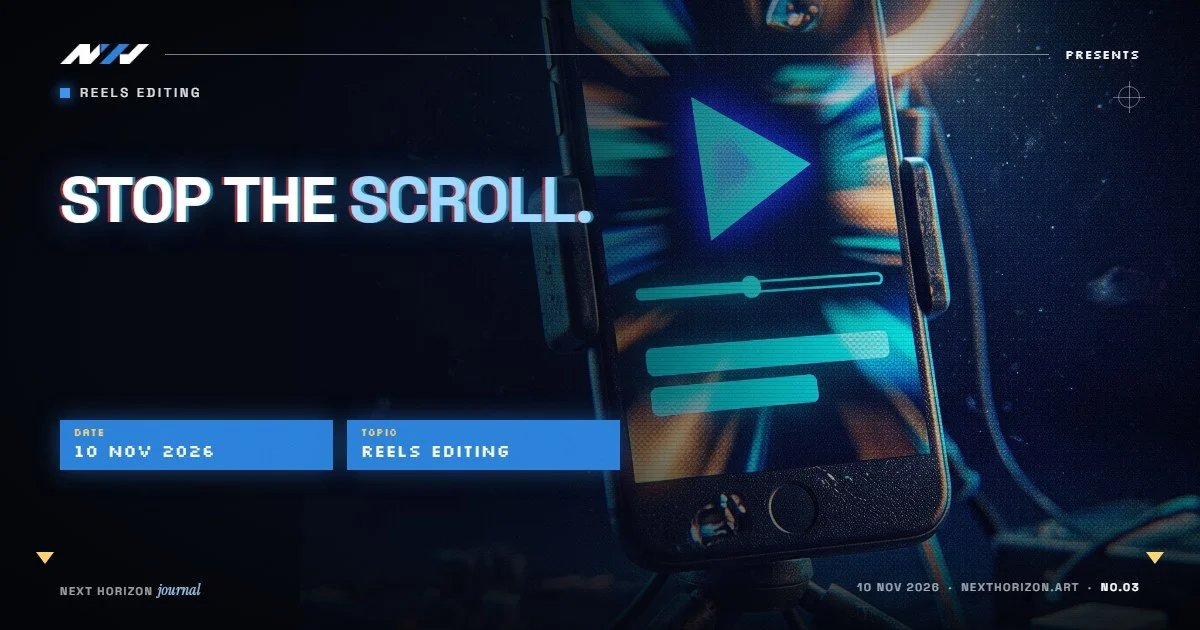
Reels editing that holds attention starts before the first cut. The opening frame is a promise to the viewer: either something interesting is happening right now, or nothing will make them stay. You have roughly 3 seconds before a thumb moves on. That is not an opinion. That is just what happens on every feed, every day. If your video opens on a logo, a slow zoom, or a black fade-in, you have already lost.
The fix is not complicated, but it does require honesty. Watch your first frame with the sound off and ask: would a stranger care? If the answer is no, the problem is not the caption or the music. The problem is the edit itself. Move the most compelling moment to the top. Cut the buildup. Start mid-action if you have to. The viewer will catch up.
I have re-edited plenty of clips where the client insisted the intro needed context first. We tested both versions. The one that opened with the payoff won every time. Context can come second. Attention comes first.
2. Pacing is a feeling, not a formula
A lot of editors think fast cuts equal engaging video. So they cut on every beat, every half-second, until the whole thing feels like a strobe light. That is not pacing. That is panic.
Good pacing in reels editing means the cuts feel earned. You hold a shot long enough that the next cut actually lands. You let a moment breathe for two seconds so the viewer can feel it, then you move. The rhythm comes from the content first and the music second, not the other way around.
Cut when something changes. Not when you are bored.
When I am editing a Reel that is not connecting, the first thing I do is strip the music and watch it silent. If it still makes sense silent, the pacing is probably solid. If it only works because the beat is covering weak cuts, the structure needs fixing before anything else does.
3. Captions are not optional anymore
Most people watch Reels with the sound off. That is not a niche behavior. It is the default. If your message lives only in the audio track, a huge portion of your audience is seeing a silent film with no subtitles.
Captions do more than just translate audio. Done well, they add a second layer of emphasis. A key word can appear on screen at the exact moment you say it, which reinforces the message instead of just repeating it. This is where reels editing gets interesting: you are designing a reading experience alongside a viewing experience, and the two need to feel like one thing.
- Keep captions short. One line at a time, two max.
- Place them where the eye already is, usually center or lower-third.
- Match the font weight and color to the energy of the content. A bold sans-serif on a talking-head video does something very different than a thin script.
- Animate them. Even a simple pop or fade makes them feel native to the platform.
If captions are an afterthought in your workflow, they will look like an afterthought. Build them into the edit from the start.
4. Sound design is what people feel but never notice
Here is something that took me a few years to fully trust: the right sound design makes an edit feel professional even if a viewer cannot explain why. A subtle whoosh on a cut, a soft impact on a text reveal, a quiet room tone underneath talking-head audio. None of these are flashy. All of them matter.
On short-form content especially, viewers have been trained by thousands of hours of well-produced Reels. They feel the difference between an edit with sound layers and one without, even if they never consciously identify it. The ones without feel flat. The ones with feel alive.
You do not need a huge library. Five or six go-to sound effects that you understand well will serve you better than a folder of a thousand files you never use. Build your small toolkit and learn it deeply.
5. The ending should almost loop back to the beginning
This one gets ignored more than it should. Platforms like Instagram reward watch time and replays. If your Reel ends cleanly and the viewer immediately replays it, the algorithm notices. So think about your ending as a setup for the beginning, not a conclusion.
That does not mean every Reel needs a literal loop. It means the last second should leave the viewer in a state where the beginning still makes sense to watch again. A lingering question. A visual that connects back to the opening frame. A line of text that recontextualizes what they just saw.
Some of the most-replayed short videos out there do not feel like videos with endings. They feel like moments you want to revisit. That is intentional reels editing, not happy accident.
6. Raw footage does not become a Reel on its own
I want to sit with this one for a second because it is where a lot of frustration lives. Clients sometimes hand over great footage and expect the edit to be straightforward. The footage is beautiful. The subject is engaging. And the resulting Reel still falls flat. Why?
Because editing is not assembly. A professional edit takes the same raw footage and makes decisions: what goes first, what gets cut entirely, where the energy peaks, how the story moves. Two editors can take identical footage and produce wildly different results. The difference is craft, not tools.
If you want to see what that difference looks like in practice, check out the work in our portfolio. The gap between raw material and finished edit is usually where most of the value is created.
If your current reels editing workflow is producing content that disappears into the feed, the issue is probably not the camera or the concept. It is the edit. That is fixable.
At Next Horizon we work with brands and creators who need short-form content that actually performs. If you want someone to look at your footage and build something that holds attention from the first frame, we are happy to talk.
Frequently Asked Questions
How long should a Reel be to get the most engagement?
There is no universal answer, but most high-performing Reels run between 15 and 30 seconds. The rule is simpler than any number: the Reel should end exactly when the content does. Padding to hit a time target kills retention faster than anything else.
What is the most important part of reels editing?
The opening 3 seconds. If the first frame does not give the viewer a reason to stay, nothing else in the edit matters. Start with your strongest moment, cut the slow intro, and build everything else around keeping that initial attention alive.
Do captions really make a difference on Reels?
Yes, significantly. A large share of viewers watch with sound off, so captions are often the only way your message lands. Beyond accessibility, animated captions add emphasis and keep the eye engaged, which directly affects how long people watch.
Should I edit my own Reels or hire a professional editor?
Editing your own Reels works fine for consistent, lower-stakes content. For anything where the video needs to actually convert or build your brand, a professional editor brings structure and pacing decisions that are hard to self-diagnose. The gap between raw footage and a polished edit is real.
How do I make my Reels feel more professional without expensive gear?
Most of it comes down to editing, not equipment. Focus on strong opening frames, rhythm-based cuts, clean captions, and basic sound design. A well-edited clip shot on a phone will outperform a poorly edited clip shot on a cinema camera.